
Ship Recycling Convention
(the Hong Kong Convention)
What is the Ship Recycling Convention?
The Hong Kong International Convention for the Safe and Environmentally Sound Recycling of Ships, 2009 (the Hong Kong Convention) entered into force on 26 June 2025.
Under the Convention, ships of 500 gross tonnage and above engaged in international voyages are required to carry and maintain an Inventory of Hazardous Materials (IHM), which identifies the hazardous materials contained in ship structure and equipment, together with their location and approximate quantities.
In addition, ships are required to be recycled only at ship recycling facilities authorized by the Administration in accordance with the requirements of the Convention.
What is the Inventory of Hazardous Materials (IHM)?
Ships of 500 gross tonnage and above subject to the Convention must develop an Inventory of Hazardous Materials (IHM) and provide it to the ship recycling facility before recycling. The IHM is a list identifying the location and approximate quantities of hazardous materials, wastes and stores present onboard. It consists of three parts: Part I, Part II and Part III. Part I of the IHM is developed at the construction stage, while Part II and Part III are developed before the ship is recycled. Part I must be kept up to date throughout the operational life of the ship. For existing ships, whose building contracts were placed before the entry into force of the Convention, Part I of the IHM may be developed not later than five years after the entry into force of the Convention or before recycling, whichever is earlier.
By referring to the IHM during the dismantling work, ship recycling facilities can carry out recycling with due consideration for the occupational health and safety of workers and the prevention of environmental pollution.
For details on the Ship Recycling Convention and the EU regional regulations, please refer to the document below.
- Outline of the Hong Kong Convention (Jan 2025)T1311e.pdf
Amendments to the IMO Guidelines for the development of the IHM were adopted in May 2015, July 2023 and April 2025. ClassNK has issued Technical Information on these amendments; please refer to the documents below.
- 2015/10/27 TEC-1050 Amendment to the IMO Guidelines for the Development of the IHM
- 2023/11/27 TEC-1312 Amendment to the IMO Guidelines for the Development of the IHM (Resolution MEPC.379(80))
- 2025/7/2 TEC-1353 Amendment of IMO's Guidelines for the Development of the Inventory of Hazardous Materials regarding Ship Recycling Convention (Resolution MEPC.405(83))
Composition of the IHM

Materials and items to be included in the Inventory
| Part I | Part II | Part III | |
|---|---|---|---|
| - | Hazardous materials contained in ship structure and equipment | Operationally generated waste | Stores |
| Time of development | At construction (*Existing ships: within 5 years after entry into force, or at recycling) | To be completed before recycling | |
| Items listed | Table A: 4 prohibited/restricted materials (asbestos, PCBs, ozone-depleting substances, AFS-prohibited substances); Table B: 9 hazardous materials (cadmium, lead, hexavalent chromium, mercury, etc.) *Existing ships: Table B as far as practicable |
Table C: potentially hazardous items (garbage, rags, etc.) | Tables C & D: items potentially containing hazardous materials (consumer goods, oils, stores, etc.) |
Hazardous materials covered by IHM Part I (Appendix 1 of the IMO IHM Guidelines, Resolution MEPC.379(80), as amended by Resolution MEPC.405(83))
| Prohibited or restricted hazardous materials | ||
|---|---|---|
| Table A | Asbestos | |
| Polychlorinated biphenyls (PCBs) | ||
| Ozone-depleting substances: | CFCs | |
| Halons | ||
| Other fully halogenated CFCs | ||
| Carbon tetrachloride | ||
| 1,1,1-Trichloroethane | ||
| Hydrochlorofluorocarbons | ||
| Hydrobromofluorocarbons | ||
| Methyl bromide | ||
| Bromochloromethane | ||
| Anti-fouling systems containing organotin compounds as a biocide | ||
| Anti-fouling systems containing cybutryne | ||
| EU-SRR* | Perfluorooctane sulfonic acid (PFOS) | |
| Hazardous materials to be identified | ||
|---|---|---|
| Table B | Cadmium and cadmium compounds | |
| Hexavalent chromium and hexavalent chromium compounds | ||
| Lead and lead compounds | ||
| Mercury and mercury compounds | ||
| Polybrominated biphenyls (PBBs) | ||
| Polybrominated diphenyl ethers (PBDEs) | ||
| Polychlorinated naphthalenes (more than 3 chlorine atoms) | ||
| Radioactive substances | ||
| Certain short-chain chlorinated paraffins | ||
| EU-SRR* | Hexabromocyclododecane (HBCDD) | |
*Under the EU Ship Recycling Regulation (EU-SRR), in addition to the Table A and Table B materials of the Ship Recycling Convention, the hazardous materials shown in the EU-SRR rows are also covered.
Material Declaration (MD) and Supplier's Declaration of Conformity (SDoC)
The Material Declaration (MD) and the Supplier's Declaration of Conformity (SDoC) provide essential basic data when developing the IHM and updating its contents.
Material Declaration (MD)
The MD is a document declaring the name, content and location of use of the hazardous materials listed in Table A and Table B of Appendix 1 of the IMO Guidelines (Resolution MEPC.379(80)) that are contained in a product.
Supplier's Declaration of Conformity (SDoC)
The SDoC is a document certifying that the contents of the MD conform to the IMO Guidelines and clarifying the responsible person.
Products subject to MD/SDoC
In principle, the MD and SDoC are required for equipment and structural materials that are fixed to the hull by painting, welding, bolting, riveting, cementing, etc. When developing the IHM, the presence of hazardous materials in such equipment and structural materials is investigated based on the MD and SDoC, in the IMO-prescribed format, submitted by suppliers (marine equipment manufacturers, parts manufacturers, material manufacturers, etc.). Suppliers must submit the MD and SDoC to the shipbuilder, the shipowner, or a party entrusted by them.
Exempted equipment and structural materials
Equipment and structural materials exempted from the IHM are defined in paragraph 3.3 of the IMO Guidelines (Resolution MEPC.379(80)) as follows:
-
Table B materials contained in alloys used as a typical structure:
"typical structure" refers to structural materials of the hull structure, superstructure, piping and equipment housings; "alloys" refers to steel, aluminium, brass, bronze, plating, solder, etc. - The content of hazardous materials that may be contained within printed circuit boards. However, the electrical and electronic equipment itself is subject to the IHM.
For details on how to prepare the MD and SDoC, please refer to the document below.
ClassNK provides template formats required for preparing the MD and SDoC. Please download and use them freely. These Excel files support the import function of PrimeShip-GREEN/SRM.
| Material Declaration (MD) for Hong Kong Convention | MD format ver. 5.01-405(83). Compliant with the 2025 IMO Guidelines amendment (Resolution MEPC.405(83)). |
| Material Declaration (MD) for EU regulation | MD format ver. 5.11-405(83). Compliant with the 2025 IMO Guidelines amendment (Resolution MEPC.405(83)) and EU-SRR Article 5. |
| Supplier's Declaration of Conformity (SDoC) | SDoC format (English / Korean / Chinese). |
Development and Possession of the Inventory for New Ships
In principle, Part I of the IHM for a new ship is developed by the shipbuilder at the construction stage, based on the Material Declaration (MD) and Supplier's Declaration of Conformity (SDoC) — in the format prescribed by the IMO Guidelines for IHM development — submitted by suppliers (marine equipment manufacturers, parts manufacturers, material manufacturers, etc.), by linking equipment containing hazardous materials to their installation locations.
After development, Part I of the IHM must be verified by ClassNK to confirm compliance with the Convention. Upon application, ClassNK conducts a content review of Part I of the IHM and an onboard survey as the initial survey of the IHM. To undergo the IHM survey during construction, please apply to the branch office in charge of the survey using the application for Registration Survey during Construction submitted by the building shipyard. To undergo the initial IHM survey after the ship enters into service, please refer to the section "Issuance of the IHM Certificate / Statement of Compliance" below and apply to the Green Certification Department (Environmental Department).
For details on how to prepare an Inventory for a new ship, please see the following materials.
Development and Possession of the Inventory for Existing Ships
For existing ships, considering the difficulty of obtaining the MD and SDoC from the original suppliers at the time of construction, Part I of the IHM may be developed by information analysis based on the IMO Guidelines, as an alternative to collecting MDs and SDoCs.
Development by information analysis combines a documentary survey — using drawings and documents held by the ship and any available supplier information — with the collection of small samples from equipment and structures onboard that may contain hazardous materials, followed by laboratory analysis to confirm the presence of hazardous materials. Because the onboard survey must be carried out by a person with in-depth knowledge and handling experience of hazardous materials, this is referred to as the "expert method".
After development, Part I of the IHM must be verified by ClassNK to confirm compliance with the Convention. Upon application, ClassNK first reviews the Visual/Sampling Check Plan (VSCP) prepared by the shipowner or an expert entrusted by the shipowner. ClassNK then conducts a content review of Part I of the IHM and an onboard survey as the initial survey. To undergo the initial survey of an IHM developed by the expert method, please refer to the section "Issuance of the IHM Certificate / Statement of Compliance" below and apply to the Green Certification Department (Environmental Department).
Review of the VSCP takes a certain number of days. Please submit the VSCP to ClassNK at least two weeks before the scheduled date of the onboard survey. In addition, the laboratory analysis of samples, the development of Part I of the IHM by the shipowner or entrusted expert, and the content review of Part I by ClassNK each require a certain number of days. We recommend starting preparation for the development of the IHM for existing ships with sufficient lead time.
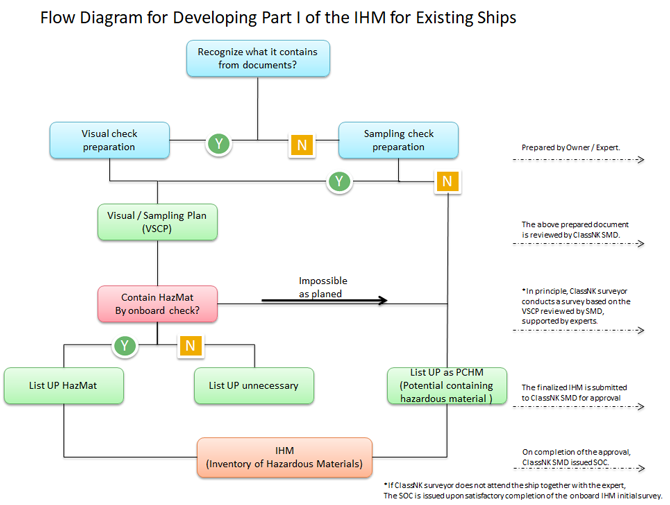
*In principle, a ClassNK surveyor attends the onboard survey together with the expert and, with the expert's support, confirms the consistency between the VSCP and the actual condition of the ship. However, where the expert provides "evidence demonstrating that the visual/sampling check has been properly carried out" in the following manner, ClassNK may accept a visual/sampling check carried out onboard by the expert alone:
- For the visual check: take photographs confirming that there is no change from the visual check plan prepared by the documentary analysis (i.e., no equipment has been replaced with different equipment, removed or newly installed compared with the equipment shown on the drawings) and record this in the survey result table (checklist) attached to the IHM. If there is any change from the visual check plan, consider an appropriate survey method and record the change and the survey result with photographs. In short, record the survey process for all items and attach photographs as evidence.
- For the sampling check: When taking samples, including samples from behind walls or inside equipment, place the sample in a plastic pouch at the sampling point, take a photograph so that the identification number is visible, and include it in the survey result table (checklist) attached to the IHM.
Where the expert company is approved by ClassNK, the simultaneous attendance of a ClassNK surveyor during the expert's onboard survey is optional. If a surveyor does not attend, after the content review of the IHM by the Green Certification Department, the initial IHM survey by a ClassNK surveyor may be carried out at any convenient opportunity, such as during a periodical class survey. After completion of the initial IHM survey, ClassNK stamps its approval on the cover of the IHM and issues the IHM Certificate or the Statement of Compliance.
If doubt arises regarding the consistency between the contents of the IHM and the actual condition of the ship during the initial IHM survey, a further survey by an expert, including sampling, may become necessary. Please also note that if the contents of the IHM change between the onboard survey and the initial IHM survey, the IHM must be updated in accordance with the IHM maintenance procedure.
Maintenance of the Inventory
Under the Ship Recycling Convention, shipowners or ship management companies are required to establish the procedures necessary for maintaining Part I of the IHM and to properly maintain Part I throughout the operational life of the ship.
The Convention and the IMO Guidelines do not prescribe the form or format of the maintenance procedures. ClassNK has made available a sample IHM maintenance procedure document covering the requirements necessary for IHM maintenance. It can be downloaded from the links below.
To maintain Part I of the IHM, the MD and SDoC must be obtained from suppliers. The products subject to collection are onboard items fixed to the hull and their parts; however, because there are various exemption provisions, some confusion is expected at the early stage of the Convention's entry into force. ClassNK has compiled and published a list of typical products, structural materials and equipment subject to MD collection.
The list is available from the link below.
Issuance of the IHM Certificate / Statement of Compliance (SOC)
For Part I of the IHM developed before the entry into force of the Convention, ClassNK conducts the prescribed survey and issues a Statement of Compliance (SOC). After the entry into force of the Convention, ships subject to the Convention must convert their documents to the International Certificate on Inventory of Hazardous Materials (IHM Certificate) by 26 June 2030. ClassNK will convert the SOC into the IHM Certificate at the timing requested by the customer. However,
because the validity period of the IHM Certificate is at most five years, converting at the time of a periodical survey may cause the certificate to expire before other Convention certificates, complicating date management. As a countermeasure, ClassNK recommends converting to the certificate before the periodical survey and then undergoing the renewal survey at the periodical survey to harmonize the expiry date with that of the other Convention certificates.
If you wish to have an IHM Certificate or SOC issued from now on, development of the IHM is required. Because demand for IHM development is expected to concentrate around 2030, the deadline for existing ships to hold the IHM Certificate, and arranging onboard surveys by experts is expected to become difficult, we recommend taking action early.
- To convert an SOC into an IHM Certificate: please check the status of delegation of authority by each flag State, and apply as an occasional survey via the application form for class maintenance survey.
- To develop the IHM during construction: please apply to the branch office in charge of the survey together with the application for Registration Survey during Construction submitted by the building shipyard.
- To develop the IHM during service: please apply to the Green Certification Department (Environmental Department) with the application form and the necessary documents specified in the "Guidelines for the Inventory of Hazardous Materials".
Note: Separately from the Ship Recycling Convention, an SOC for the EU regulation (EU-SRR) may be required. If, after developing an IHM that does not address the EU-SRR, it becomes necessary to address the EU-SRR, an additional survey by an expert may be required. If you wish to obtain an SOC addressing the EU-SRR, please indicate this at the time of application.
Regulation (EU) No. 1257/2013 on Ship Recycling (EU-SRR)
With the aim of encouraging early ratification of the Hong Kong Convention by flag States both within and outside Europe, the EU has established Regulation (EU) No. 1257/2013 on Ship Recycling (EU-SRR), which reflects the EU's own environmental controls in addition to the Ship Recycling Convention.
Under the EU-SRR, since 31 December 2020 all ships calling at or anchoring in EU member states are required to develop and possess an IHM in accordance with Article 5 or Article 12 of the EU-SRR, and to obtain a Statement of Compliance (SOC) from the flag State or a recognized organization.
Article 5 of the EU-SRR applies to EU-flagged ships and to flag States that independently require its application:
- Article 5 requires that, in addition to the hazardous materials specified by the Ship Recycling Convention, the presence of two further substances — PFOS and HBCDD — be investigated when developing and maintaining Part I of the IHM. The new installation of PFOS is prohibited. In addition, recycling of the ship is limited to ship recycling facilities included in the EU List.
Article 12 of the EU-SRR, which has requirements almost identical to the Ship Recycling Convention, applies to non-EU-flagged ships:
- Article 12 requires that the same materials specified by the Ship Recycling Convention be investigated when developing Part I of the IHM, and that, in addition to the materials specified by the Convention, the presence of HBCDD be investigated when maintaining the IHM.
For detailed information on the EU-SRR and the requirements of the flag state, please refer to the technical information below.
- 2023/12/22 TEC-1313 Compliance with the Ship Recycling Convention / EU-SRR (Liberian flagged vessels)
- 2024/10/25 TEC-1311 Outline of the Hong Kong International Convention (the Ship Recycling Convention)
- 2023/10/30 TEC-1278 Compliance with the EU Ship Recycling Regulation (Panamanian flagged vessels)
- 2022/1/21 TEC-1255 IHM Certificate to Part I of the IHM and EU Regulation (Japanese flagged ships)
- 2020/9/3 TEC-1207 Compliance with the EU Ship Recycling Regulation (Non-EU flagged vessels)
- 2019/7/1 TEC-1185 Adding Note on Survey Status to EU flagged ships subject to the EU Regulation
- 2018/12/28 TEC-1170 Commencement of the EU Regulation on Ship Recycling
- 2014/1/15 TEC-0978 Introduction to the EU Regulation on Ship Recycling
ClassNK issues the Ship Recycling Convention and EU certificates/SOCs based on the delegation of authority from each country and the notifications concerning the EU regulation. The EU certificate/SOC is issued stating compliance with either Article 5 or Article 12 of the EU-SRR according to the requirements of each flag State.
In preparation for a flag change to a flag State that will require compliance with Article 5 in the future, ClassNK can, upon request, issue a Statement of Fact (SOF) confirming compliance with Article 5 of the EU-SRR.
Flag Information
The status of ratification of the Hong Kong Convention by each flag State, as well as any notifications issued by each flag State, are as follows.
| Flag administration | Ratified the convention | Remarks |
|---|---|---|
| Antigua and Barbuda | ||
| Bahamas | ||
| Bahrain | ||
| Bangladesh | O | |
| Barbados | O |
|
| Belgium (EU) | O | |
| Belize | ||
| British Virgin |
|
|
| Brunei |
|
|
| Cayman Islands | ||
| Congo | O | |
| Croatia(EU) | O | |
| Cook Islands | ||
| Curacao |
|
|
| Cyprus (EU) | O |
|
| Denmark (EU) | O | |
| Dominica | ||
| Estonia(EU) | O | |
| Finland (EU) | O | |
| France(EU) | O |
For new ships, IHM Part I shall be developed below methods,
|
| Georgia | ||
| Germany (EU) | O | |
| Ghana | O | |
| Gibraltar | ||
| Greece (EU) |
|
|
| Hong Kong |
|
|
| India | O |
|
| Ireland (EU) | ||
| Isle of Man | ||
| Japan | O |
|
| Kiribati | ||
| Kuwait | ||
| Lebanon |
|
|
| Liberia | O |
|
| Libya | ||
| Lithuania (EU) | ||
| Luxembourg (EU) | O |
|
| Malaysia |
|
|
| Malta (EU) | O |
|
| Marshall Islands | O | |
| Mauritius | ||
| Netherlands (EU) | O | |
| Norway (EU) | O |
|
| Pakistan | O | |
| Palau | ||
| Panama | O |
IHM Certificate:
RfR Certificate:
|
| Philippines | ||
| Portugal (EU) | O |
|
| San Marino | ||
| Sao Tome & Principe | O | |
| Serbia | O | |
| Singapore |
|
|
| Solomon Islands | O | |
| South Africa | ||
| Spain(EU) | O | |
| Sri Lanka | ||
| St. Kitts and Nevis | ||
| St. Vincent and the Grenadines | ||
| Switzerland | ||
| Thailand | ||
| Türkiye | O | |
| Tuvalu | ||
| U.K. |
|
|
| U. S. A. | ||
| Vanuatu | ||
| Vietnam |
|
PrimeShip-GREEN/SRM
Developing the IHM requires the collection and management of a large number of MDs and SDoCs, imposing a significant burden on both shipbuilders and suppliers. ClassNK has developed "PrimeShip-GREEN/SRM", a cloud-based IHM development support system, and provides it to stakeholders. The system allows a series of clerical tasks necessary for IHM development to be carried out over the Internet. Use of the system is optional; however, as of 2024 almost all shipyards building NK-classed ships use PrimeShip-GREEN/SRM. PrimeShip-GREEN/SRM also supports the development of an IHM that complies with the EU regulation.
To register, access the URL below, click "Register Organization" on the login page, and follow the instructions on the screen.
PrimeShip-GREEN/SRM URL: https://www.psgreensrm.com/
For further details on how to use PrimeShip-GREEN/SRM, please refer to the following documents.
About the IHM Guidelines
ClassNK issues the "Guidelines for the Inventory of Hazardous Materials", which reflect the Ship Recycling Convention and the EU-SRR. The Guidelines can be viewed on the "Guidelines" page of ClassNK MyPage after registering as a user on the ClassNK website.
About the Ship Recycling Facility Guidelines
ClassNK issues the "Guidelines for Ship Recycling Facilities", which compile the requirements necessary for a ship recycling facility to obtain verification of compliance with the Convention. The Guidelines can be viewed on the "Guidelines" page of ClassNK MyPage after registering as a user on the ClassNK website.
Issuance of Statement of Compliance (SOC) for Ship Recycling Facilities / List of Verified Ship Recycling Facilities
When a ship recycling facility obtains authorization from the competent authority, it must develop a Ship Recycling Facility Plan (SRFP) describing the methods for ensuring safety and environmental protection at the facility. After the entry into force of the Ship Recycling Convention, ships of Contracting States can only be dismantled and recycled at ship recycling facilities authorized to carry out ship recycling by the competent authority.
As an independent third-party verification body, ClassNK issues a Statement of Compliance to ship recycling facilities that are confirmed, through the above review, to meet the requirements of the Convention and other applicable standards.
List of verified ship recycling facilities by ClassNK (As of the end of June 2026)
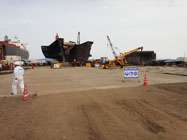
Location: India (Gujarat)
Estimated annual recycling capacity (LDT*1): 70,000LDT
Dismantling method: Intertidal landing
Maximum capacity of ship to be recycled: Length: Any length, Breadth: 60m,
Draft: Any depth
URL: www.kalthiashipbreaking.com
Open the SOC*2
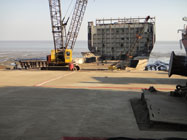
Location: India (Gujarat)
Estimated annual recycling capacity (LDT*1): 120,000LDT
Dismantling method: Intertidal landing
Maximum capacity of ship to be recycled: Length: Any length, Breadth: 120m,
Draft: Any depth
URL: http://www.priyablue.com
Open the SOC*2
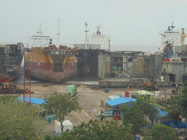
Location: India (Gujarat)
Estimated annual recycling capacity (LDT*1): 90,000LDT
Dismantling method: Intertidal landing
Maximum capacity of ship to be recycled: Length: Any length, Breadth: 60m,
Draft: Any depth
Note: Shree Ram Vessel Scrap Pvt. Ltd. and Shree Ram Shipping Industries Pvt. Ltd. are adjacent two ship recycling facilities and are operated by one management body in accordance with the Ship Recycling Facility Plan (SRFP) which is common to both of them.
URL: http://www.shreeramgroup.in
Open the SOC*2
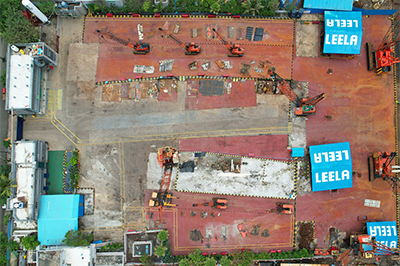
Location: India (Gujarat)
Estimated annual recycling capacity (LDT*1): 75,000LDT
Dismantling method: Intertidal landing
Maximum capacity of ship to be recycled: Length: Any length, Breadth: 80m,
Draft: Any depth
URL: http://www.leelagreenship.com/
Open the SOC*2
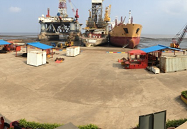
Location: India (Gujarat)
Estimated annual recycling capacity (LDT*1): 150,000LDT
Dismantling method: Intertidal landing
Maximum capacity of ship to be recycled: Length: Any length, Breadth: 60m X 2,
Draft: Any depth
URL: http://www.shreeramgroup.in
Open the SOC*2
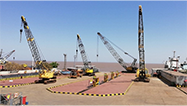
Location: India (Gujarat)
Estimated annual recycling capacity (LDT*1): 37,000LDT
Dismantling method: Intertidal landing
Maximum capacity of ship to be recycled: Length: Any length, Breadth: 51m,
Draft: Any depth
URL: http://www.jrdindustries.net
Open the SOC*2
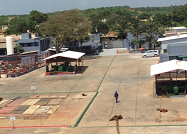
Location: India (Gujarat)
Estimated annual recycling capacity (LDT*1): 100,000LDT
Dismantling method: Intertidal landing
Maximum capacity of ship to be recycled: Length: Any length, Breadth: 55m,
Draft: Any depth
URL: http://www.luckygroupindia.com/
Open the SOC*2
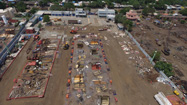
Location: India (Gujarat)
Estimated annual recycling capacity (LDT*1): 100,000LDT
Dismantling method: Intertidal landing
Maximum capacity of ship to be recycled: Length: Any length, Breadth: 83 m,
Draft: Any depth
Open the SOC*2
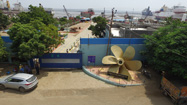
Location: India (Gujarat)
Estimated annual recycling capacity (LDT*1): 100,000LDT
Dismantling method: Intertidal landing
Maximum capacity of ship to be recycled: Length: Any length, Breadth: 49 m,
Draft: Any depth
URL: http://alangauto.com/
Open the SOC*2
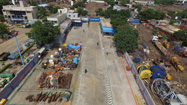
Location: India (Gujarat)
Estimated annual recycling capacity (LDT*1): 100,000LDT
Dismantling method: Intertidal landing
Maximum capacity of ship to be recycled: Length: 350m, Breadth: 30m,
Draft: 10m
Open the SOC*2
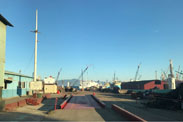
Location: Türkiye (Izmir)
Estimated annual recycling capacity (LDT*1): 45,000LDT
Dismantling method: landing method
Maximum capacity of ship to be recycled: Length: 350m, Breadth: 50 m,
Draft: 9m
Open the SOC*2
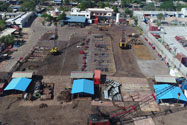
Location: India (Gujarat)
Estimated annual recycling capacity (LDT*1): 45,000LDT
Dismantling method: Intertidal landing
Maximum capacity of ship to be recycled: Length: Any length, Breadth: 45 m,
Draft: Any depth
URL: http://www.shreeramgroup.in/
Open the SOC*2
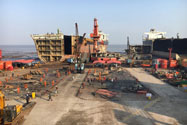
Location: India (Gujarat)
Estimated annual recycling capacity (LDT*1): 60,000LDT
Dismantling method: Intertidal landing
Maximum capacity of ship to be recycled: Length: 400m, Breadth: 80 m,
Draft: Any depth
URL: http://www.baijnathmelaram.com/
Open the SOC*2
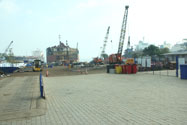
Location: India (Gujarat)
Estimated annual recycling capacity (LDT*1): 30,000LDT
Dismantling method: Intertidal landing
Maximum capacity of ship to be recycled: Any length, Breadth: 45m,
Draft: Any depth
Open the SOC*2
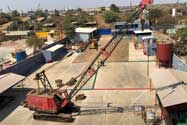
Location: India (Gujarat)
Estimated annual recycling capacity (LDT*1): 80,000LDT
Dismantling method: Intertidal landing
Maximum capacity of ship to be recycled: Any length, Breadth: 36m,
Draft: Any depth
URL: http://www.luckygroupindia.com/
Open the SOC*2
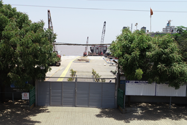
Location: India (Gujarat)
Estimated annual recycling capacity (LDT*1): 70,000LDT
Dismantling method: Intertidal landing
Maximum capacity of ship to be recycled: Any length, Breadth: 52m,
Draft: Any depth
Open the SOC*2
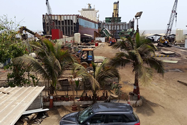
Location: India (Gujarat)
Estimated annual recycling capacity (LDT*1): 25,000LDT
Dismantling method: Intertidal landing
Maximum capacity of ship to be recycled: Any length, Breadth: 44m,
Draft: Any depth
Open the SOC*2
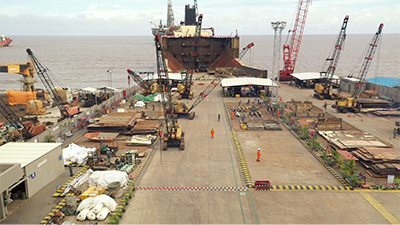
Location: India (Gujarat)
Estimated annual recycling capacity (LDT*1): 80,000LDT
Dismantling method: Intertidal landing
Maximum capacity of ship to be recycled: Any length, Breadth: 75m,
Draft: Any depth
Open the SOC*2
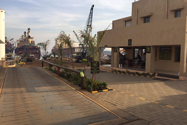
Location: India (Gujarat)
Estimated annual recycling capacity (LDT*1): 50,000LDT
Dismantling method: Intertidal landing
Maximum capacity of ship to be recycled: Any length, Breadth: 60m,
Draft: Any depth
Open the SOC*2
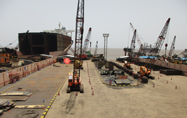
Location: India (Gujarat)
Estimated annual recycling capacity (LDT*1): 60,000LDT
Dismantling method: Intertidal landing
Maximum capacity of ship to be recycled: Any length, Breadth: 45m,
Draft: Any depth
URL: http://bansalgroupindia.com/ship-re-cycling/
Open the SOC*2
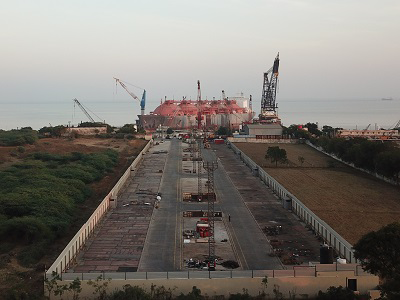
Location: India (Gujarat)
Estimated annual recycling capacity (LDT*1): 100,000 LDT
Dismantling method: Intertidal landing
Maximum capacity of ship to be recycled: Any length, Breadth: 120m,
Draft: Any depth
Open the SOC*2
Location: India (Gujarat)
Estimated annual recycling capacity (LDT*1): 50,000 LDT
Dismantling method: Intertidal landing
Maximum capacity of ship to be recycled: Any length, Breadth: 48m,
Draft: Any depth
Open the SOC*2
Location: India (Gujarat)
Estimated annual recycling capacity (LDT*1): 100,000 LDT
Dismantling method: Intertidal landing
Maximum capacity of ship to be recycled: Any length, Breadth: 95m,
Draft: Any depth
Open the SOC*2
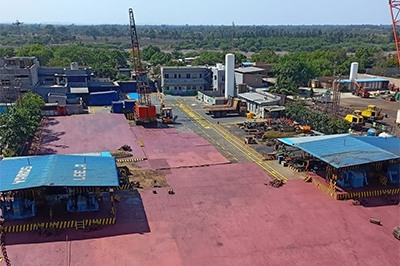
Location: India (Gujarat)
Estimated annual recycling capacity (LDT*1): 60,000LDT
Dismantling method: Intertidal landing
Maximum capacity of ship to be recycled: Any length, Breadth: 40m,
Draft: Any depth
URL: http://www.leelagreenship.com/
Open the SOC*2
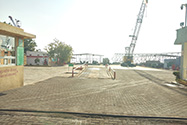
Location: India (Gujarat)
Estimated annual recycling capacity (LDT*1): 100,000LDT
Dismantling method: Intertidal landing
Maximum capacity of ship to be recycled: Any length, Breadth: 47m,
Draft: Any depth
Open the SOC*2
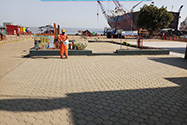
Location: India (Gujarat)
Estimated annual recycling capacity (LDT*1): 150,000 LDT
Dismantling method: Intertidal landing
Maximum capacity of ship to be recycled: Any length, Breadth: 110m,
Draft: Any depth
URL: http://www.sachdevagroup.in/
Open the SOC*2
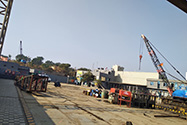
Location: India (Gujarat)
Estimated annual recycling capacity (LDT*1): 75,000 LDT
Dismantling method: Intertidal landing
Maximum capacity of ship to be recycled: Any length, Breadth: 49m,
Draft: Any depth
Open the SOC*2
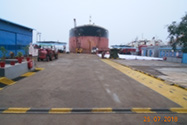
Location: India (Gujarat)
Estimated annual recycling capacity (LDT*1): 60,000LDT
Dismantling method: Intertidal landing
Maximum capacity of ship to be recycled: Any length, Breadth: 45m,
Draft: Any depth
Open the SOC*2
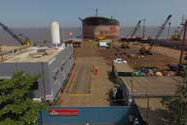
Location: India (Gujarat)
Estimated annual recycling capacity (LDT*1): 70,000LDT
Dismantling method: Intertidal landing
Maximum capacity of ship to be recycled: Any length, Breadth: 60m,
Draft: Any depth
Open the SOC*2
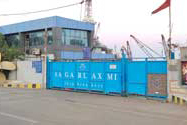
Location: India (Gujarat)
Estimated annual recycling capacity (LDT*1): 50,000LDT
Dismantling method: Intertidal landing
Maximum capacity of ship to be recycled: Any length, Breadth: 77m,
Draft: Any depth
Open the SOC*2
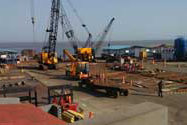
Location: India (Gujarat)
Estimated annual recycling capacity (LDT*1): 75,000LDT
Dismantling method: Intertidal landing
Maximum capacity of ship to be recycled: Any length, Breadth: 52m,
Draft: Any depth
Open the SOC*2
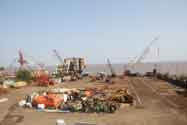
Location: India (Gujarat)
Estimated annual recycling capacity (LDT*1): 39,580LDT
Dismantling method: Intertidal landing
Maximum capacity of ship to be recycled: Any length, Breadth: 83m,
Draft: Any depth
Open the SOC*2
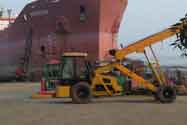
Location: India (Gujarat)
Estimated annual recycling capacity (LDT*1): 40,000LDT
Dismantling method: Intertidal landing
Maximum capacity of ship to be recycled: Any length, Breadth: 32.22m,
Draft: Any depth
Open the SOC*2
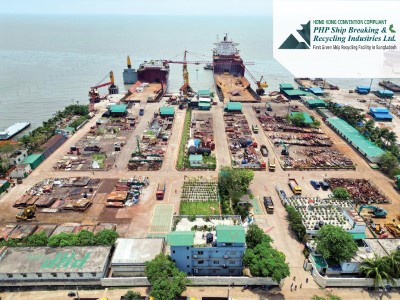
Location: Bangladesh (Chattogram)
Estimated annual recycling capacity (LDT*1): 160,000 LDT
Dismantling method: Intertidal landing
Maximum capacity of ship to be recycled: Any length, Breadth: 100.00m,
Draft: Any depth
Open the SOC*2
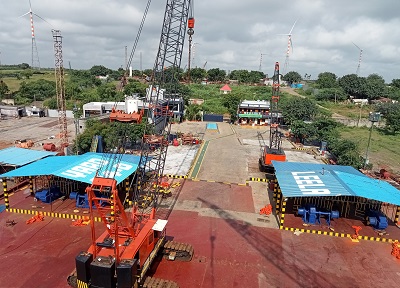
Location: India (Gujarat)
Estimated annual recycling capacity (LDT*1): 60,000 LDT
Dismantling method: Intertidal landing
Maximum capacity of ship to be recycled: Any length, Breadth: :43.00m,
Draft: Any depth
Open the SOC*2
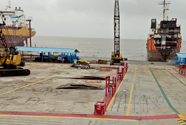
Location: India (Gujarat)
Estimated annual recycling capacity (LDT*1): 70,000 LDT
Dismantling method: Intertidal landing
Maximum capacity of ship to be recycled: Any length,
Breadth: :65m,
Draft: Any depth
URL: www.priyablue.com
Open the SOC*2
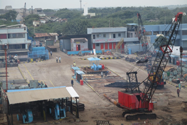
Location: India (Gujarat)
Estimated annual recycling capacity (LDT*1): 40,000 LDT
Dismantling method: Intertidal landing
Maximum capacity of ship to be recycled: Any length,
Breadth: :41m,
Draft: Any depth
Open the SOC*2
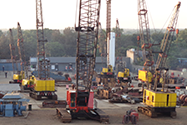
Location: India (Gujarat)
Estimated annual recycling capacity (LDT*1): 150,000 LDT
Dismantling method: Intertidal landing
Maximum capacity of ship to be recycled: Any length,
Breadth: 63m,
Draft: Any depth
Open the SOC*2
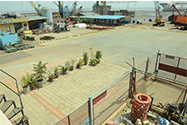
Location: India (Gujarat)
Estimated annual recycling capacity (LDT*1): 40,000 LDT
Dismantling method: Intertidal landing
Maximum capacity of ship to be recycled: Any length,
Breadth: :59.50m,
Draft: Any depth
Open the SOC*2
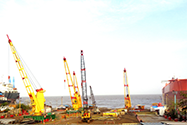
Location: India (Gujarat)
Estimated annual recycling capacity (LDT*1): 35,000 LDT
Dismantling method: Intertidal landing
Maximum capacity of ship to be recycled: Any length,
Breadth: :69.7m,
Draft: Any depth
Open the SOC*2
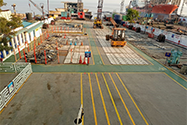
Location: India (Gujarat)
Estimated annual recycling capacity (LDT*1): 30,000 LDT
Dismantling method: Intertidal landing
Maximum capacity of ship to be recycled: Any length,
Breadth: :32.0m,
Draft: Any depth
Open the SOC*2
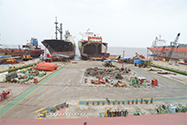
Location: India (Gujarat)
Estimated annual recycling capacity (LDT*1): 100,000 LDT
Dismantling method: Intertidal landing
Maximum capacity of ship to be recycled: Any length,
Breadth: 55.0m,
Draft: Any depth
Open the SOC*2
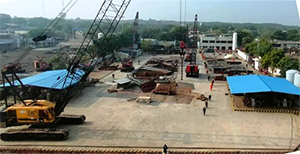
Location: India (Gujarat)
Estimated annual recycling capacity (LDT*1): 49,286 LDT
Dismantling method: Intertidal landing
Maximum capacity of ship to be recycled: Any length,
Breadth: 61m,
Draft: Any depth
URL: https://bharatgreenshiprecyclers.com/
Open the SOC*2
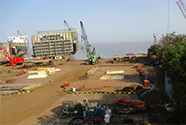
Location: India (Gujarat)
Estimated annual recycling capacity (LDT*1): 50,000 LDT
Dismantling method: Intertidal landing
Maximum capacity of ship to be recycled: Any length,
Breadth: 93m,
Draft: Any depth
Open the SOC*2
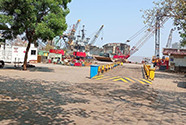
Location: India (Gujarat)
Estimated annual recycling capacity (LDT*1): 50,000 LDT
Dismantling method: Intertidal landing
Maximum capacity of ship to be recycled: Any length,
Breadth: 77m,
Draft: Any depth
Open the SOC*2
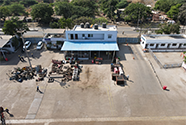
Location: India (Gujarat)
Estimated annual recycling capacity (LDT*1): 100,000 LDT
Dismantling method: Intertidal landing
Maximum capacity of ship to be recycled: Any length,
Breadth: 120m,
Draft: Any depth
Open the SOC*2
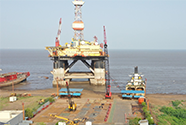
Location: India (Gujarat)
Estimated annual recycling capacity (LDT*1): 100,000 LDT
Dismantling method: Intertidal landing
Maximum capacity of ship to be recycled: Any length,
Breadth: 61m,
Draft: Any depth
Open the SOC*2
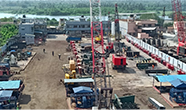
Location: India (Gujarat)
Estimated annual recycling capacity (LDT*1): 40,000 LDT
Dismantling method: Intertidal landing
Maximum capacity of ship to be recycled: Any length,
Breadth: 45m,
Draft: Any depth
Open the SOC*2
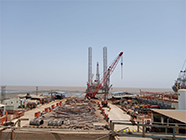
Location: India (Gujarat)
Estimated annual recycling capacity (LDT*1): 50,000 LDT
Dismantling method: Intertidal landing
Maximum capacity of ship to be recycled: Any length,
Breadth: 40m,
Draft: Any depth
Open the SOC*2
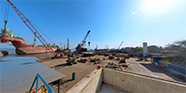
Location: India (Gujarat)
Estimated annual recycling capacity (LDT*1): 50,000 LDT
Dismantling method: Intertidal landing
Maximum capacity of ship to be recycled: Any length,
Breadth: 60m,
Draft: Any depth
Open the SOC*2
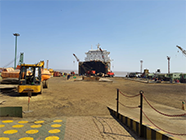
Location: India (Gujarat)
Estimated annual recycling capacity (LDT*1): 50,000 LDT
Dismantling method: Intertidal landing
Maximum capacity of ship to be recycled: Any length,
Breadth: 46m,
Draft: Any depth
Open the SOC*2
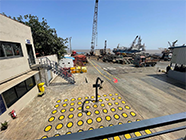
Location: India (Gujarat)
Estimated annual recycling capacity (LDT*1): 55,000 LDT
Dismantling method: Intertidal landing
Maximum capacity of ship to be recycled: Any length,
Breadth: 60m,
Draft: Any depth
Open the SOC*2
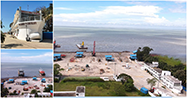
Location: Bangladesh (Chattogram)
Estimated annual recycling capacity (LDT*1): 150,000 LDT
Dismantling method: Intertidal landing
Maximum capacity of ship to be recycled: Any length, Breadth: Any Breadth,
Draft: Any depth
Open the SOC*2
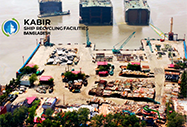
Location: Bangladesh (Chattogram)
Estimated annual recycling capacity (LDT*1): 100,000 LDT
Dismantling method: Intertidal landing
Maximum capacity of ship to be recycled: Any length, Breadth:85m,
Draft: Any depth
Open the SOC*2
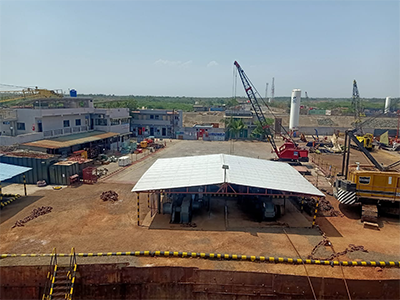
Location: India (Gujarat)
Estimated annual recycling capacity (LDT*1): 40,000 LDT
Dismantling method: Intertidal landing
Maximum capacity of ship to be recycled: Any length, Breadth: 45m,
Draft: Any depth
Open the SOC*2
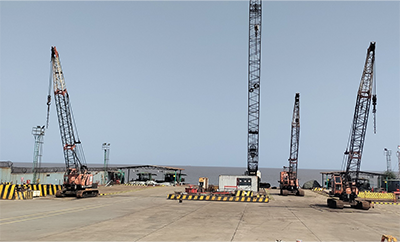
Location: India (Gujarat)
Estimated annual recycling capacity (LDT*1): 100,000 LDT
Dismantling method: Intertidal landing
Maximum capacity of ship to be recycled: Any length, Breadth: 48m,
Draft: Any depth
Open the SOC*2
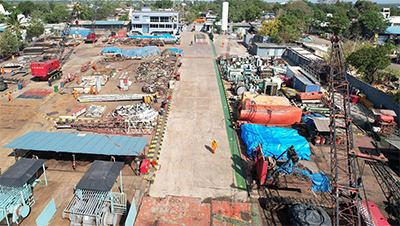
Location: India (Gujarat)
Estimated annual recycling capacity (LDT*1): 60,000 LDT
Dismantling method: Intertidal landing
Maximum capacity of ship to be recycled: Any length, Breadth: 80m,
Draft: Any depth
Open the SOC*2
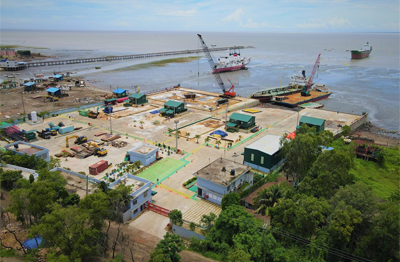
Location: Bangladesh (Chittagong)
Estimated annual recycling capacity (LDT*1): 120,000 LDT
Dismantling method: Intertidal landing
Maximum capacity of ship to be recycled: Any length, Breadth: Any Breadth,
Draft: Any depth
URL: www.krshiprecycling.com
Open the SOC*2
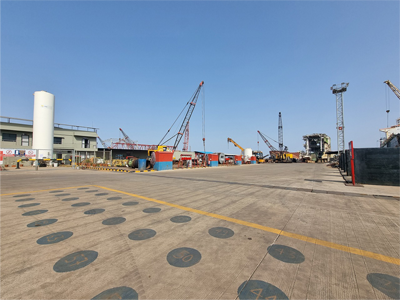
SHANTI SHIP BREAKERS PRIVATE LIMITED
Location: India (Gujarat)
Estimated annual recycling capacity (LDT*1): 100,000 LDT
Dismantling method: Intertidal landing
Maximum capacity of ship to be recycled: Any length, Breadth: 45m,
Draft: Any depth
URL: https://www.rkb.group/
Open the SOC*2
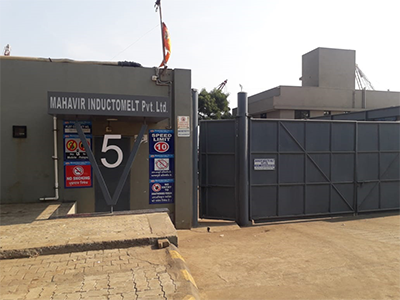
Location: India (Gujarat)
Estimated annual recycling capacity (LDT*1): 100,000 LDT
Dismantling method: Intertidal landing
Maximum capacity of ship to be recycled: Any length, Breadth: 110m,
Draft: Any depth
Open the SOC*2
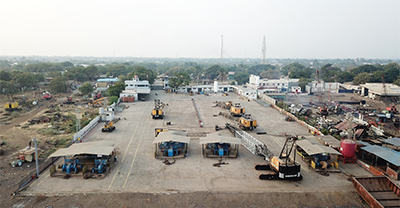
Location: India (Gujarat)
Estimated annual recycling capacity (LDT*1): 100,000 LDT
Dismantling method: Intertidal landing
Maximum capacity of ship to be recycled: Any length, Breadth: 64m,
Draft: Any depth
Open the SOC*2
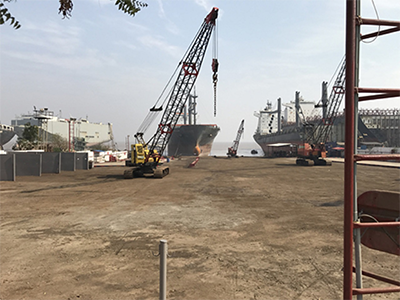
Location: India (Gujarat)
Estimated annual recycling capacity (LDT*1): 75,000 LDT
Dismantling method: Intertidal landing
Maximum capacity of ship to be recycled: Any length, Breadth: 40m,
Draft: Any depth
Open the SOC*2
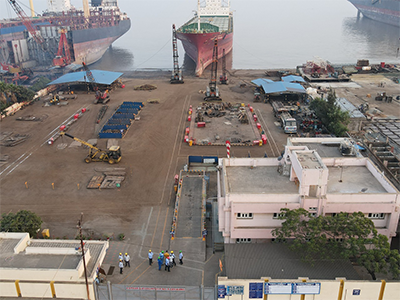
Location: India (Gujarat)
Estimated annual recycling capacity (LDT*1): 60,000 LDT
Dismantling method: Intertidal landing
Maximum capacity of ship to be recycled: Any length, Breadth: 78m,
Draft: Any depth
Open the SOC*2
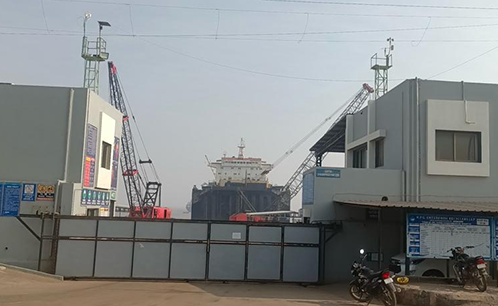
Location: India (Gujarat)
Estimated annual recycling capacity (LDT*1): 30,000 LDT
Dismantling method: Intertidal landing
Maximum capacity of ship to be recycled: Any length, Breadth: 45m,
Draft: Any depth
Open the SOC*2
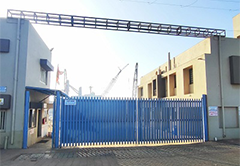
Location: India (Gujarat)
Estimated annual recycling capacity (LDT*1): 35,455 LDT
Dismantling method: Intertidal landing
Maximum capacity of ship to be recycled: Any length, Breadth: 112m,
Draft: Any depth
Open the SOC*2
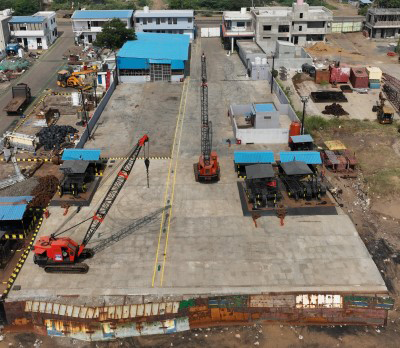
Location: India (Gujarat)
Estimated annual recycling capacity (LDT*1): 50,000 LDT
Dismantling method: Intertidal landing
Maximum capacity of ship to be recycled: Any length, Breadth: 31m,
Draft: Any depth
Open the SOC*2
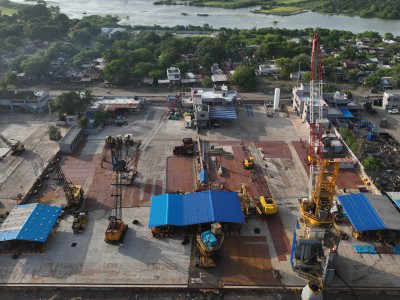
Location: India (Gujarat)
Estimated annual recycling capacity (LDT*1): 120,000 LDT
Dismantling method: Intertidal landing
Maximum capacity of ship to be recycled: Any length, Breadth: 92m,
Draft: Any depth
Open the SOC*2
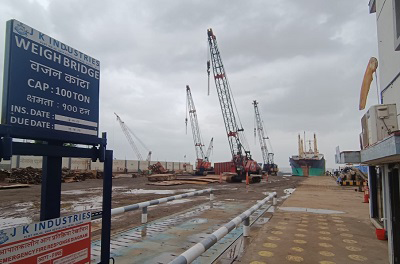
Location: India (Gujarat)
Estimated annual recycling capacity (LDT*1): 20,000 LDT
Dismantling method: Intertidal landing
Maximum capacity of ship to be recycled: Any length, Breadth: 45m,
Draft: Any depth
Open the SOC*2
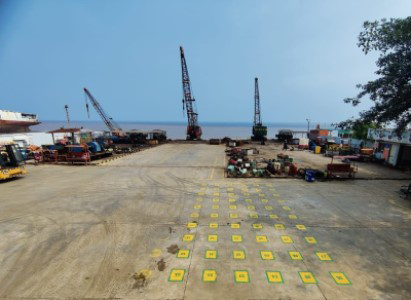
Location: India (Gujarat)
Estimated annual recycling capacity (LDT*1): 50,000 LDT
Dismantling method: Intertidal landing
Maximum capacity of ship to be recycled: Any length, Breadth: 40m,
Draft: Any depth
Open the SOC*2
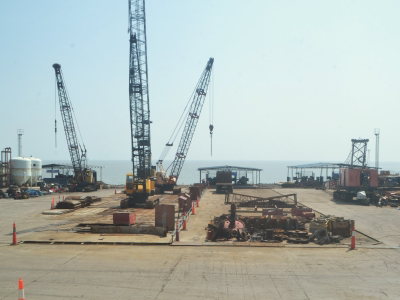
Location: India (Gujarat)
Estimated annual recycling capacity (LDT*1): 100,000 LDT
Dismantling method: Intertidal landing
Maximum capacity of ship to be recycled: Any length, Breadth: 61m,
Draft: Any depth
Open the SOC*2
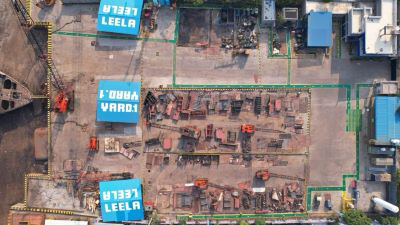
Location: India (Gujarat)
Estimated annual recycling capacity (LDT*1): 60,000 LDT
Dismantling method: Intertidal landing
Maximum capacity of ship to be recycled: Any length, Breadth: 71m,
Draft: Any depth
Open the SOC*2
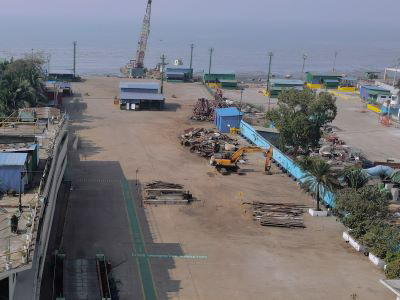
Location: Bangladesh (Chittagong)
Estimated annual recycling capacity (LDT*1): 100,000 LDT
Dismantling method: Intertidal landing
Maximum capacity of ship to be recycled: Any length, Breadth: Any Breadth,
Draft: Any depth
Open the SOC*2
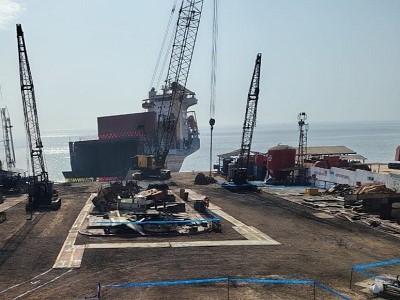
Location: India (Gujarat)
Estimated annual recycling capacity (LDT*1): 20,000 LDT
Dismantling method: Intertidal landing
Maximum capacity of ship to be recycled: Any length,
Breadth: :40m,
Draft: Any depth
Open the SOC*2
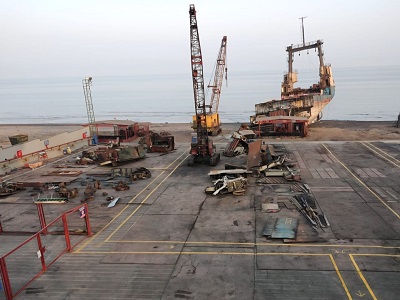
Location: India (Gujarat)
Estimated annual recycling capacity (LDT*1): 40,000 LDT
Dismantling method: Intertidal landing
Maximum capacity of ship to be recycled: Any length,
Breadth: :55m,
Draft: Any depth
Open the SOC*2
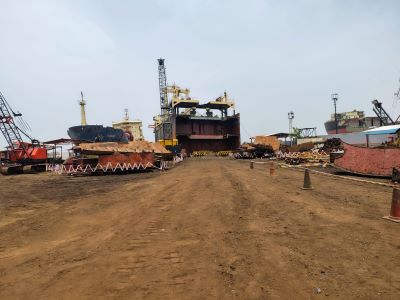
Location: India (Gujarat)
Estimated annual recycling capacity (LDT*1): 35,455 LDT
Dismantling method: Intertidal landing
Maximum capacity of ship to be recycled: Any length,
Breadth: :47m,
Draft: Any depth
Open the SOC*2
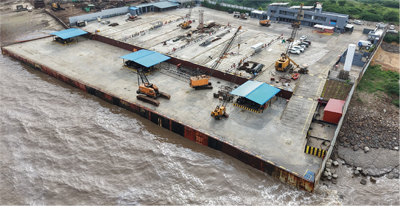
Location: India (Gujarat)
Estimated annual recycling capacity (LDT*1): 100,000 LDT
Dismantling method: Intertidal landing
Maximum capacity of ship to be recycled: Any length,
Breadth: :120m,
Draft: Any depth
Open the SOC*2

Location: Pakistan (Gadani)
Estimated annual recycling capacity (LDT*1): 120,000 LDT
Dismantling method: Intertidal landing
Maximum capacity of ship to be recycled: Any length,
Breadth: :60m,
Draft: Any depth
URL: https://salamsinternational.com/
Open the SOC*2
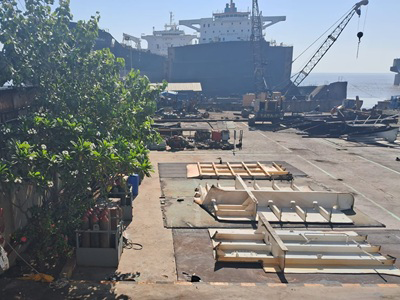
Location: India (Gujarat)
Estimated annual recycling capacity (LDT*1): 42,130 LDT
Dismantling method: Intertidal landing
Maximum capacity of ship to be recycled: Any length,
Breadth: :40m,
Draft: Any depth
Open the SOC*2
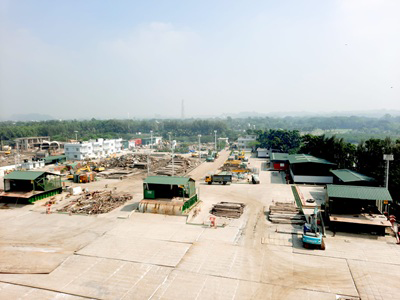
Location: Bangladesh (Chittagong)
Estimated annual recycling capacity (LDT*1): 200,000 LDT
Dismantling method: Intertidal landing
Maximum capacity of ship to be recycled: Any length,
Any Breadth,
Draft: Any depth
Open the SOC*2
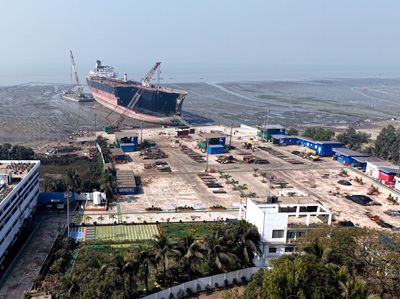
Location: Bangladesh (Chittagong)
Estimated annual recycling capacity (LDT*1): 150,000 LDT
Dismantling method: Intertidal landing
Maximum capacity of ship to be recycled: Any length,
Any Breadth,
Draft: Any depth
Open the SOC*2
Information in this table is based on the SRFP developed by the ship recycling facilities.
*1: LDT: Light Displacement Tonnage
*2: The image shown here is not a true copy of the certificate. However, the content is identical.
ClassNK published “Guidelines for Ship Recycling Facilities” in order to clarify the procedure and requirements for issuance of the SOC. The Guidelines can be download from “ClassNK MyPage” after the registration as a user.
ClassNK MyPage Login
Contact
For more information, please contact us to the following.
Tel: +81-3-5226-3025
Fax: +81-3-5226-3026
E-mail: ihm@classnk.or.jp(for Inventory)
E-mail: recycling@classnk.or.jp (for Ship recycling facility)
E-mail: srpt@classnk.or.jp (for PrimeShip-GREEN/SRM)